
Hoboken Weight Loss
Wellness Store
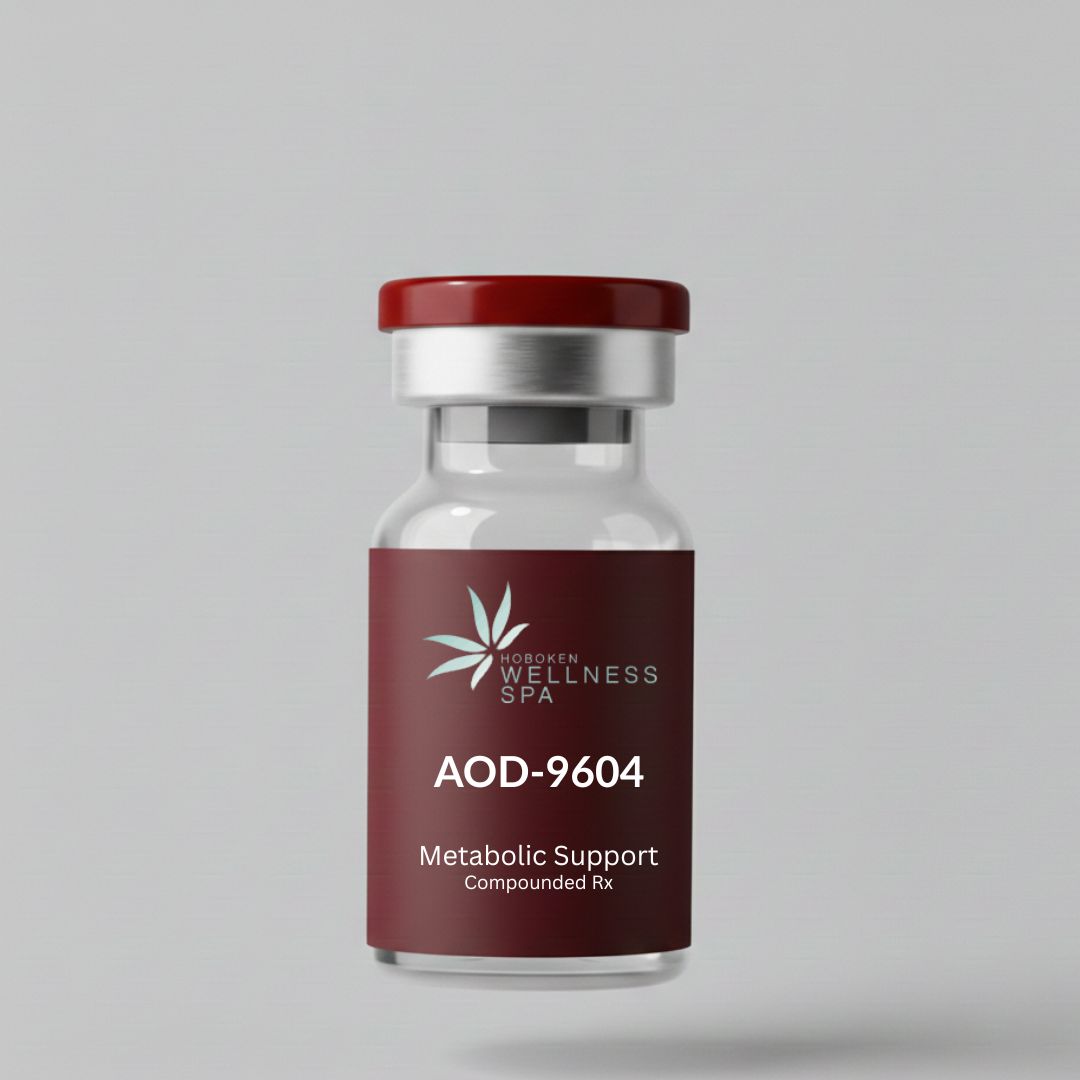
AOD-9604
AOD-9604 is a peptide studied for its potential role in supporting fat-metabolism pathways. When used consistently under provider oversight, patients may experience improved momentum toward body-composition goals over time.
Support fat metabolism and Stay consistent.
If you’re doing “the right things” but progress still feels slow, frustrating, or unpredictable, you’re not alone. Many people hit a point where nutrition and movement alone don’t seem to move the needle the way they used to.
AOD-9604 is a peptide that has been studied for how it may support the body’s natural fat-metabolism signaling. It’s often chosen by people who want a more targeted, supportive approach without stimulants, appetite suppression, or aggressive interventions.
This option is best viewed as a long-term consistency tool, designed to work alongside structured habits, provider oversight, and ongoing follow-up, not as a quick fix.
What is AOD-9604?
AOD-9604 is a small fragment of a naturally occurring human growth hormone chain. Instead of using the entire hormone, this approach focuses on a specific segment that has been researched for its relationship to fat metabolism.

In simple terms, it’s designed to help send signals that may influence how the body handles stored fat, without acting like full growth hormone. It’s commonly used as part of a supervised program focused on long-term metabolic support.
Key Effects:
Supports fat-metabolism signaling: May help reinforce the body’s natural processes involved in breaking down stored fat.
Complements lifestyle habits: Often used alongside nutrition and movement routines to support consistency over time.
Non-stimulant approach: Does not rely on appetite suppression or stimulant-based mechanisms.
Fits long-term plans: Commonly positioned for patients focused on sustainable body-composition support.
Simple, focused therapy: Used as a single-purpose peptide rather than a broad, systemic intervention.
Who Is an Ideal Candidate for AOD-9604?

You may be a good candidate if you:
Want support for body-composition goals
Prefer a steady, long-term approach
Are already working on nutrition and activity
Value clinician oversight and ongoing follow-up
Want an option that supports consistency rather than extremes
Additional factors that may make this a good fit:
You feel progress has slowed despite good habits
You’re focused on routine and structure
You want a program that evolves with provider guidance
Who Should Not Take Glutathione?
A licensed provider will review your history, but AOD-9604 is generally not recommended for individuals who:
Have a known allergy to glutathione or injectable ingredients
Are pregnant or breastfeeding
Have a history of severe reactions to injections
Have uncontrolled asthma
Have complex medical conditions that require additional review
Final approval is always determined by the licensed provider reviewing your intake.
Possible Side Effects and How to Manage Them
Some patients report mild, temporary effects, which often improve as the body adjusts.
Common Side Effects
Mild nausea
Headache
Fatigue
Injection-site redness or irritation
Management Strategies
Stay well-hydrated
Maintain consistent meals
Rotate injection sites as instructed
Communicate with your provider if symptoms persist
Your care team is available to help guide adjustments if needed.
What our patients are saying
Check out these amazing results from our members. You could be our next success story!
At 31 years old, standing at 5'4", and weighing 206 lbs, I started a transformative journey with Hoboken Weight Loss using GLP-1 weight loss medication. Fast forward eight months later, the scale now shows a 154 lbs!

After having my 4 kids, my body just didn't snap back like I thought it would. The semaglutide injections have been life changing and I'm finally starting to feel like myself again.

For the first time in my life, I feel like the best version of myself! 🧡🧡🧡
